
Sleep Facts
Sleep Facts some general/kooky stuff about sleep...
Occasionally while I'm out scouring the net, I'll find interesting/relevant articles about sleep, here they are...
Sleep Facts Video:
40 Sleep Facts you were probably too tired to think about!
Source: http://www.abc.net.au/science/sleep/facts.htm
- The average human will spend 1/3 or their life sleeping, which equates to about 20 - 25 years over 75 Year life span
- The record for the longest period without sleep is 18 days, 21 hours, 40 minutes during a rocking chair marathon. The record holder reported hallucinations, paranoia, blurred vision, slurred speech and memory and concentration lapses.
- It's impossible to tell if someone is really awake without close medical supervision. People can take cat naps with their eyes open without even being aware of it.
- Anything less than five minutes to fall asleep at night means you're sleep deprived. The ideal is between 10 and 15 minutes, meaning you're still tired enough to sleep deeply, but not so exhausted you feel sleepy by day.
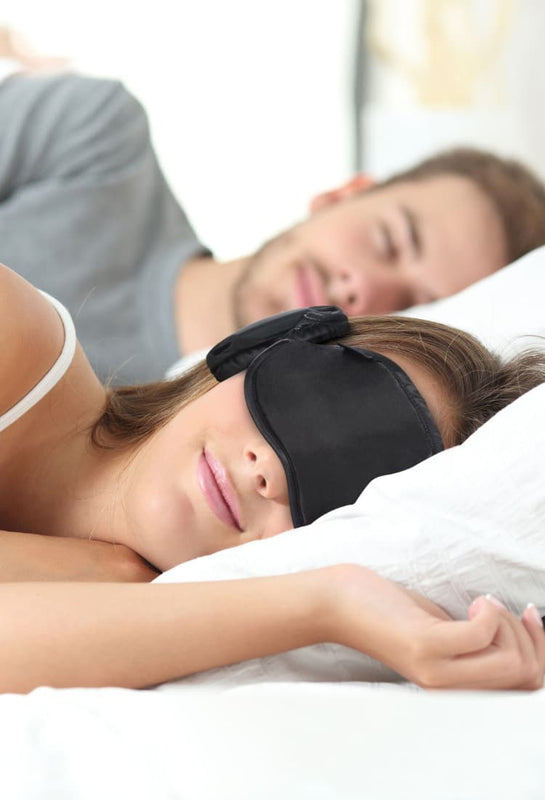
- A new baby typically results in 400-750 hours lost sleep for parents in the first year! Quick, buy a sleep mask!
- One of the best predictors of insomnia later in life is the development of bad habits from having sleep disturbed by young children.
- The continuous brain recordings that led to the discovery of REM (rapid eye-movement) sleep were not done until 1953, partly because the scientists involved were concerned about wasting paper.
- REM sleep occurs in bursts totalling about 2 hours a night, usually beginning about 90 minutes after falling asleep.
- Dreams, once thought to occur only during REM sleep, also occur (but to a lesser extent) in non-REM sleep phases. It's possible there may not be a single moment of our sleep when we are actually dreamless.
- REM dreams are characterised by bizarre plots, but non-REM dreams are repetitive and thought-like, with little imagery obsessively returning to a suspicion you left your mobile phone somewhere, for example.
- Certain types of eye movements during REM sleep correspond to specific movements in dreams, suggesting at least part of the dreaming process is analagous to watching a film
- No-one knows for sure if other species dream but some do have sleep cycles similar to humans.
- Elephants sleep standing up during non-REM sleep, but lie down for REM sleep.
- Some scientists believe we dream to fix experiences in long-term memory, that is, we dream about things worth remembering. Others reckon we dream about things worth forgetting to eliminate overlapping memories that would otherwise clog up our brains.
- Dreams may not serve any purpose at all but be merely a meaningless by-product of two evolutionary adaptations sleep and consciousness.
- REM sleep may help developing brains mature. Premature babies have 75 per cent REM sleep, 10 per cent more than full-term bubs. Similarly, a newborn kitten puppy rat or hampster experiences only REM sleep, while a newborn guinea pig (which is much more developed at birth) has almost no REM sleep at all.
- Scientists have not been able to explain a 1998 study showing a bright light shone on the backs of human knees can reset the brain's sleep-wake clock.
- British Ministry of Defence researchers have been able to reset soldiers' body clocks so they can go without sleep for up to 36 hrs. Tiny optical fibres embedded in special spectacles project a ring of bright white light (with a spectrum identical to a sunrise) around the edge of soldiers' retinas, fooling them into thinking they have just woken up. The system was first used on US pilots during the bombing of Kosovo.
- Seventeen hours of sustained wakefulness leads to a decrease in performance equivalent to a blood alcohol-level of 0.05%.
- The 1989 Exxon Valdez oil spill off Alaska, the Challenger space shuttle disaster and the Chernobyl nuclear accident have all been attributed to human errors in which sleep-deprivation played a role.
- The NRMA estimates fatigue is involved in one in 6 fatal road accidents.
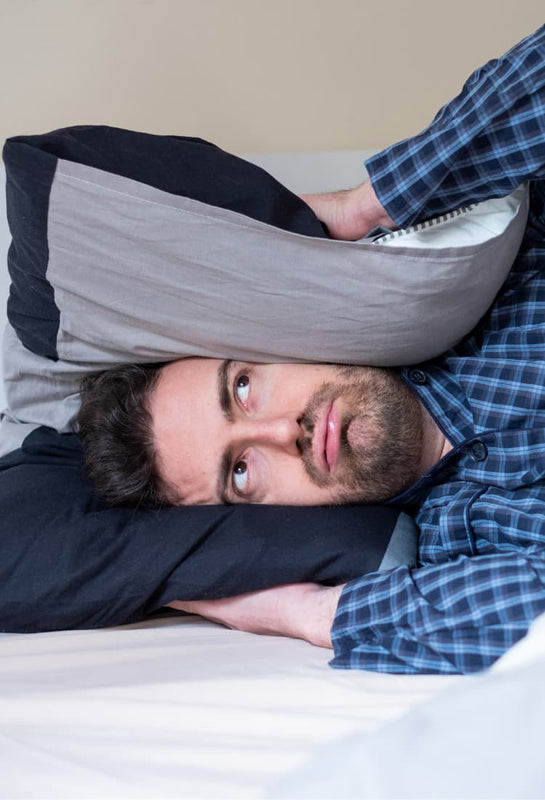
- Exposure to noise at night can suppress immune function even if the sleeper doesn’t wake. Unfamiliar noise, and noise during the first and last two hours of sleep, has the greatest disruptive effect on the sleep cycle.
- The "natural alarm clock" which enables some people to wake up more or less when they want to is caused by a burst of the stress hormone adrenocorticotropin. Researchers say this reflects an unconscious anticipation of the stress of waking up.
- Some sleeping tablets, such as barbiturates suppress REM sleep, which can be harmful over a long period.
- In insomnia following bereavement, sleeping pills can disrupt grieving.
- Tiny luminous rays from a digital alarm clock can be enough to disrupt the sleep cycle even if you do not fully wake. The light turns off a "neural switch" in the brain, causing levels of a key sleep chemical to decline within minutes.
- To drop off we must cool off; body temperature and the brain's sleep-wake cycle are closely linked. That's why hot summer nights can cause a restless sleep. The blood flow mechanism that transfers core body heat to the skin works best between 18 and 30 degrees. But later in life, the comfort zone shrinks to between 23 and 25 degrees one reason why older people have more sleep disorders.
- A night on the grog will help you get to sleep but it will be a light slumber and you won't dream much.
- After five nights of partial sleep deprivation, three drinks will have the same effect on your body as six would when you've slept enough.
- Humans sleep on average around three hours less than other primates like chimps, rhesus monkeys, squirrel monkeys and baboons, all of whom sleep for 10 hours.
- Ducks at risk of attack by predators are able to balance the need for sleep and survival, keeping one half of the brain awake while the other slips into sleep mode.
- Ten per cent of snorers have sleep apnoea, a disorder which causes sufferers to stop breathing up to 300 times a night and significantly increases the risk of suffering a heart attack or stroke.
- Snoring occurs only in non-REM sleep
- Teenagers need as much sleep as small children (about 10 hrs) while those over 65 need the least of all (about six hours). For the average adult aged 25-55, eight hours is considered optimal
- Some studies suggest women need up to an hour's extra sleep a night compared to men, and not getting it may be one reason women are much more susceptible to depression than men.
- Feeling tired can feel normal after a short time. Those deliberately deprived of sleep for research initially noticed greatly the effects on their alertness, mood and physical performance, but the awareness dropped off after the first few days.
- Diaries from the pre-electric-light-globe Victorian era show adults slept nine to 10 hours a night with periods of rest changing with the seasons in line with sunrise and sunsets.
- Most of what we know about sleep we've learned in the past 25 years.
- As a group, 18 to 24 year-olds deprived of sleep suffer more from impaired performance than older adults.
- Experts say one of the most alluring sleep distractions is the 24-hour accessibility of the internet.
- The extra-hour of sleep received when clocks are put back at the start of daylight in Canada has been found to coincide with a fall in the number of road accidents.
The secret of sleep
November 11, 2009
Telegraph
People who sleep in the foetal position seem tough but are really sensitive and shy, according to a US study.
Any second-grader knows why humans need food and water. But even the most gifted scientist on the planet cannot explain why people sleep, writes Erica Goode.
"It may be the biggest open question in biology," said Allan Rechtschaffen, a sleep expert and a professor emeritus at the University of Chicago.
Ignorance about one of life’s most basic activities is not a result of lack of trying by scientists and others to understand why sleep is needed.
For centuries, poets and philosophers have speculated on the benefits of spending part of each 24-hour cycle in slumber.
Fifty years of intensive sleep research, aided by the development of novel technologies, have turned speculation into theory, ruling out some possibilities and yielding a variety of intriguing leads.
But the researchers who bragged at a conference in the early 1970s that the secret of sleep would be theirs by the millennium, have had to revise their estimates.
"We were too optimistic," said Michel Jouvet, a professor emeritus at Claude Bernard University in Lyon, France, and a member of the French Academy of Sciences who attended that long-ago meeting. "The brain is more complicated than we thought."
Still, scientists know far more than they once did. The discovery of rapid eye movement, or REM, sleep in 1953 awakened scientists to the realisation that sleep was not "a simple turning off of the brain", but an active, organised physiological process. Five decades later, few researchers would dispute that sleep serves some critical — if unknown — biological purpose.
All mammals, birds and reptiles engage in some form of sleep, Rechtschaffen noted in a 1998 paper, even if they do it perched on a tree branch or, like the dolphin, while swimming, with one half of the brain at a time. Sleep has also endured through the eons, despite the fact that it interferes with other survival-enhancing activities.
"While we sleep, we do not procreate, protect or nurture the young, gather food, earn money, write papers, et cetera," Rechtschaffen wrote.
Equally telling is the finding that when humans and other animals lose sleep, they proceed to make it up, paying off the "debt" by sleeping longer or more intensely.
And, sleep deprivation over long periods appears to have serious consequences, though what they are is still debated, because it is difficult to separate the effects of lost sleep from those of stress or other factors.
Researchers once thought that a prolonged lack of sleep produced mental illness. They now know that this is not the case, though waking subjects up every few minutes, early studies showed, made them cranky.
Nor is there proof that humans have died from a lack of sleep. But rats deprived of sleep die in two to three weeks, or in five to six weeks if they are deprived only of REM, a sleep stage in which brain activity is similar to that in waking.
What is it about sleep that makes it essential to life? Experts say that despite widespread belief, it is not simply the fact that we need sleep masks to help rest.
Another theory holds that sleep may serve to protect animals, by taking them out of circulation during the dangerous hours when predators roam. Yet this theory, Rechtschaffen and others point out, cannot explain why the sleep winks lost one night are made up the next or why the impact of long-term sleep deprivation is so severe.
Experts have argued that REM sleep helps consolidate memory and advance learning, and a number of studies have examined this premise, including two reports published in the journal Nature last month.
But other researchers, including Dr Jerome Siegel, a professor of psychiatry and biobehavioural sciences at UCLA, have challenged this theory. People who take antidepressants called monoamine oxidase inhibitors, which suppress REM sleep, do not show memory deficits, Siegel noted in a 2001 review.
Similarly, patients with brain injuries that do away with REM appear to suffer no problems in memory, Siegel said. Nor are the animals that spend the most time in REM — the platypus, for example, which averages eight hours of REM each day compared with the two hours typical of humans — known for their learning ability or powers of recall.
As in waking, most neurons in the brain fire actively during REM. The exception is nerve cells involved with the transmitter chemicals serotonin, norepinephrine and histamine, which remain inactive. It is possible, Siegel and others have suggested, that these neurons become overused, and that REM allows them to rest and regain their sensitivity.
The most promising theory so far, some experts believe, proposes that REM sleep plays a role in brain development. Newborns spend more time in REM than adults. Animals that spend long periods in REM are also more immature at birth.
Meanwhile, the search continues. The answer, experts say, may turn out to be something obvious or something not yet dreamed of.
"There is something tremendous out there," Rechtschaffen said, "and we just haven’t found it."
Personality and sleep
A scientist claims to have discovered a direct link between people’s favourite sleeping positions and their personalities.
Professor Chris Idzikowski, one of Britain’s leading sleep experts, has identified six different positions and each one says more about a person’s character than they may care to reveal.
The most popular position, is the "foetus" position, with 41 per cent of people. When women alone were asked, 51 per cent of them said that they usually sleep curled up on their side, holding on to the pillow.
This position, the professor claims, means that they may appear tough but "are actually sensitive souls right to their core" and are usually shy.
Those who adopt the "starfish" — spreadeagled on their backs — tend to be good listeners who make friends easily but do not like to be the centre of attention and prefer to let other people take the limelight.
Of the six positions, the "freefaller" is the more rarefied of sleeping shapes, with just 6.5 per cent of people preferring to sleep on their front. They tend to have "a brash and gregarious exterior", although this confident front hides a nervous personality that responds badly to personal criticism.
A "soldier", who sleeps on their back, tends to be quiet and reserved, setting high standards for themselves; a "log", who sleeps on their side, is relaxed and social; and a "yearner", a similar position to a "log" but with raised arms, is suspicious and cynical.
The research was conducted by comparing a person’s preferred sleeping position to the most common personality traits identified in the subject.
Despite certain personality difficulties associated with the "freefall" position, they can comfort themselves with the fact that the position is good for digestion. "Starfish" and "soldiers" are more likely to have a bad night’s sleep and to snore.
The research also revealed that changing your sleeping position was just as unlikely as couples’ changing the side of the bed on which they usually sleep. Just 5 per cent fell asleep in a different position every night, while the vast majority stuck to their favourite.
Idzikowski even bothered to research the use of continental quilts during the night, and found that one arm or leg sticking out from under the quilt is Britain’s favourite position, followed by both feet poking out the end.
Idzikowski, a "freefaller" who is attempting to sleep in a yogic position that involves crossing your legs around your neck, said there was no perfect position in which to sleep.
He said: "That’s a question like, ‘How much sleep should I have?’ I never answer it."
Telegraph
For women, too much sleep is as bad as too little
Author: Julie Robotham, Medical Writer
Date: 29/01/2009
Words: 319
Publication: Sydney Morning Herald
Section: News And Features
Page: 1
Sleeping for seven hours or less markedly increases women's heart disease risk, researchers have found. But excessive shut-eye can be dangerous, too, with nine-hour slumberers at almost as much risk as the chronically sleep deprived.
The United States study, of more than 70,000 female nurses aged 45 to 65, asked them in 1986 how much sleep they usually managed during 24 hours. The women were followed up over the following 10 years with all heart attacks and other indications of heart disease recorded.
Compared to the women who slept for eight hours daily, those who slept only five hours were at 45 per cent higher risk of heart attacks. But even those who slept seven hours had 9 per cent more heart problems than the eight-hour sleepers.
At the other extreme, those who clocked up nine or more hours per day had 38 per cent higher risk of heart disease.
The lead researcher, Dr Najib Ayas, from Boston's Brigham and Women's Hospital, took into account the women's weight and whether or not they smoked or snored which can influence sleep duration. Her study was published yesterday in the Archives of Internal Medicine.
Ron Grunstein, a sleep specialist and clinical associate professor at Sydney's Woolcock Institute of Medical Research, said some people could sleep only a very short period because of work or family commitments. But insomniacs generally slept more than they thought they did.
A recent NSW survey of 4000 people aged 18 to 65 showed the average person slept 7.4 hours, Professor Grunstein said, but there was no Australian historical data for comparison.
Sleep deprivation could cause insulin resistance, which in turn might increase heart disease risk, he said. Meanwhile, excessive sleepiness was linked to sleep apnoea, in which the sleeper is starved of oxygen another heart disease risk factor.
-------------------------------------------------
March 4 2009
By David Wroe
Health Reporter
Some children diagnosed with attention deficit hyperactivity disorder may simply be tired because their snoring is disturbing their sleep, researchers say.
Australian experts have backed a US study that found a quarter of children aged five to seven diagnosed with mild ADHD also snored. This was five times the sleep disorder rate of other children, suggesting some children were misdiagnosed.
Arthur Teng, from the sleep medicine unit at Sydney Children's Hospital, said breathing difficulties seriously disrupted sleep, producing symptoms that could be mistaken for ADHD.
"It's like someone poking you in the ribs every few minutes," he said. "How would you feel in the morning? Would you pay attention, would you concentrate, would you behave well, would you be a bit cranky?"
Study author David Gozal, from the University of Louisville, said the message to parents was that "if you have a kid who is hyperactive and snores, think about the possibility that the two may be connected".
-------------------------------------------------
Grumbling and tired, Americans do not get enough sleep
WASHINGTON, April 2 AFP|Published: Wednesday April 3, 9:26 AM
One in four adult Americans do not get enough sleep, creating an army of some 47 million tired and irritable workers, according to a study published today.
A study by the National Sleep Foundation sounded a clarion call to urge Americans back to bed to thwart an epidemic of daytime sleepiness "that can impact cognition, performance and state of mind".
Trends in the behaviour of the average American adult seem to have shifted, the study found, with more people living to work instead of working to live cutting out the time formerly devoted to sleeping, socialising and sex.
"You are how you sleep," observed the organisation's director, Richard Gelula. "Some of the problems we face as a society, from road rage to obesity, may be linked to lack of sleep or poor sleep." Insomnia, experienced regularly by 58 per cent of the poll respondents, was the prevailing sleep problem that resulted in daytime sleepiness, which respondents said impaired their work performance (93 per cent), increased their risk of injuries (91 per cent) and led to health problems (90 per cent).
Increased daytime sleepiness also has a major bearing on people's attitudes towards themselves and their work, according to the telephone poll of 1,010 adults over age 18 conducted between October 1 and December 10 last year.
People who reported daytime sleepiness were more likely to describe themselves as "dissatisfied with life" (21 per cent) or "angry", while those respondents who experienced few symptoms of insomnia were more likely to characterise themselves as "relaxed", "happy" or "full of energy".
"The new findings clearly indicate the American public understands the strong connection between their sleep, their behaviour, and the quality of their daily life," Gelula said. "Yet, about one quarter of adults in this country fail to meet their own minimum sleep needs at night to be fully alert the next day."
The foundation said new research shows inadequate sleep can be linked with anger, anxiety and sadness, something Americans generally experienced in spades in the aftermath of the September 11 terror strikes.
In a November poll, the foundation said one in two survey respondents reported experiencing problems with insomnia in the days following the attacks by four hijacked aircraft on New York, the Pentagon and a field in Pennsylvania that left more than 3,000 dead.
This is my slant on what I've learnt about sleep from all my research....
Tips for a better night’s Sleep
BEDTIME RITUALS
•Try taking a warm bath.
•Lower the room temperature (a cool environment improves sleep).
•Don't "activate" your brain by balancing a chequebook, reading a thriller, or doing other stressful activities.
•Unplug the telephone.
•Make sure your feet are warm!! Studies have shown that it's almost impossible to sleep when your feet are very cold.
FOOD
•Avoid caffeine less than five hours before bedtime.
•Don't stop for a drink after work; although at first you may feel relaxed, alcohol disturbs sleep.
•Eat a light snack before bedtime. Don't go to bed too full or too hungry.
EXERCISE
•If you exercise at the workplace, do so at least three hours before you plan on going to bed. Otherwise, exercise after you sleep. Because exercise is alerting and raises the body temperature, it should not be done too close to bedtime.
PRESCRIPTIONS.
Sleep medications do not cure sleep problems, but may be recommended for short-term use. Be sure to tell your doctor if you are a shift worker. These medications may be helpful for one or two sleep cycles after a shift schedule change. Talk to your doctor about whether this type of medication would be helpful to you.
Facts about sleep
Melatonin is a chemical that is produced by the body to help induce sleep. Melatonin supplements have been advertised as a sleep aid. However, studies have not shown that melatonin helps shift workers. Also, questions about safety and dosing have not been answered.
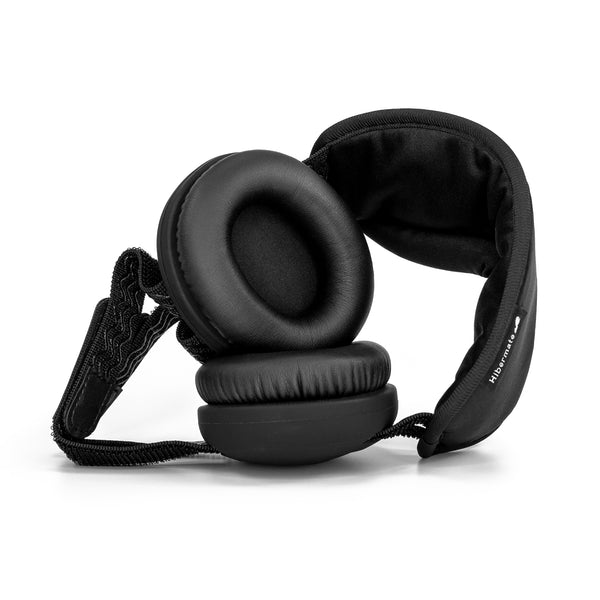
It is important to keep a regular sleep schedule, even on days off and weekends. However, if you can't get enough sleep or feel drowsy, naps as short as 20 minutes can be helpful. Naps (or "power naps") can maintain or improve alertness, performance and mood. Some people feel groggy or sleepier after a nap. These feelings usually go away within 1-15 minutes, while the benefits of the nap may last for many hours. The evening or night worker can take a nap to be refreshed before work. The truck driver, bus driver or motorist can use the "power nap" to improve their chances of making it to their destination if they’re feeling tired. The "Hibermate" is perfect for this purpose.
Studies show that napping at the workplace is especially effective for workers who need to maintain a high degree of alertness, attention to detail, and for people who must make quick decisions. In situations where the worker is working double shifts or 24-hour shifts, naps at the workplace are even more important and useful.
The Circadian Clock
All animals need sleep even plants appear to have rest periods. The human body naturally follows a 24-hour period of wakefulness and sleepiness that is regulated by an internal circadian clock. In fact, the circadian clock is linked to nature's cycle of light and darkness. The clock regulates cycles in body temperature, hormones, heart rate, and other body functions.
For humans, the desire to sleep is strongest between midnight and six a.m. Many people are alert in the morning, with a natural dip in alertness in the mid-afternoon.
It is difficult to reset the internal circadian clock. It is not surprising that 1020% of night shift workers report falling asleep on the job, usually during the second half of the shift. That's why shift workers who work all night may find it difficult to sleep during the day, even though they are tired.
Unfortunately, when it comes to sleep, most shift workers don't get enough (most adults require 8 hours of sleep per day). When shifts fall during the night (11 p.m. -7 a.m.), the worker is fighting the natural wake-sleep pattern. It may be hard to stay alert at night and just as hard to fall asleep and stay asleep during the day. Night workers get less sleep than daytime workers do, and the sleep is less restful. Sleep is more than just "beauty rest" for the body; it helps restore and rejuvenate the brain and organ systems so that they function properly. Chronic lack of sleep harms a person's health, on-the-job safety, task performance, memory and mood.
Driving after work can be risky for the shift worker, particularly since you have been awake all night and the body needs to sleep. For the evening worker coming home around midnight, the risk of meeting drunk drivers is higher. People think that opening the car windows or listening to the radio will keep them awake. However, studies show that these methods work for only a short period of time. If you are sleepy when your shift is over, try to take a nap before driving home. Remember, sleep can quickly overcome you when you don't want it to.
Follow these steps to arrive home safely:
1.Carpool, if possible. Have the most alert person do the driving.
2.Drive defensively.
3.Don't stop off for a "night cap."
4.If you are sleepy, stop to nap, but do so in your locked car in a well-lit area.
5.Take public transportation, if possible.
If you have tried some of these tips and your efforts to get enough sleep are not successful, it may be time to seek professional help. If problems persist, talk to your doctor.
Remember, when you are not getting the sleep you need, you are at risk... and so are those around you. Inadequate sleep increases your risk for falling asleep at the wheel, accidents on the job, and problems at home. Your doctor can help identify the cause, which can be successfully treated or managed. Your doctor can evaluate your sleep problem and determine whether you may have a sleep disorder.
According to a recent American Study, 65% of people reported that they do not get enough sleep. When sleep deprived, people think and move more slowly, make more mistakes, and have difficulty remembering things. These negative effects lead to lower job productivity and can cause accidents. The financial loss to American businesses is estimated to be in the billions each year! Lack of sleep is associated with irritability, impatience, anxiety, and depression. These problems can upset job and family relationships, spoil social activities, and cause unnecessary suffering.
Shift workers experience more stomach problems (especially heartburn and indigestion), menstrual irregularities, colds, flu, and weight gain than day workers. Heart problems are more likely too, along with higher blood pressure. The risk of workplace and car accidents rises for tired shift workers, especially on the drive to and from work.
Sleep and the traveller
Jet Lag
Jet jag is experienced when a person travels over three time zones by air. The body takes time to adjust to the new time zone of the destination and the traveler may experience feelings of tiredness, fatigue, anxiety, loss of appetite and even insomnia. It usually takes around three days to get over the effects of Jet lag, but there are some things a traveller can do before leaving home to minimize these effects.
1.Try to avoid excessive eating and alcohol whilst on the flight and instead drink lots of juice or fresh water. It is very easy to get dehydrated on a long flight.
2.Try to select flight schedules which minimize sleep deprivation. The best way is to choose a flight that arrives early evening so that you can go to sleep soon after you arrive. For the really long trips, check if it’s possible to organize a stop over.
3.Try and rest a few days before you take your flight, and do your best to avoid the last minute dashing around.
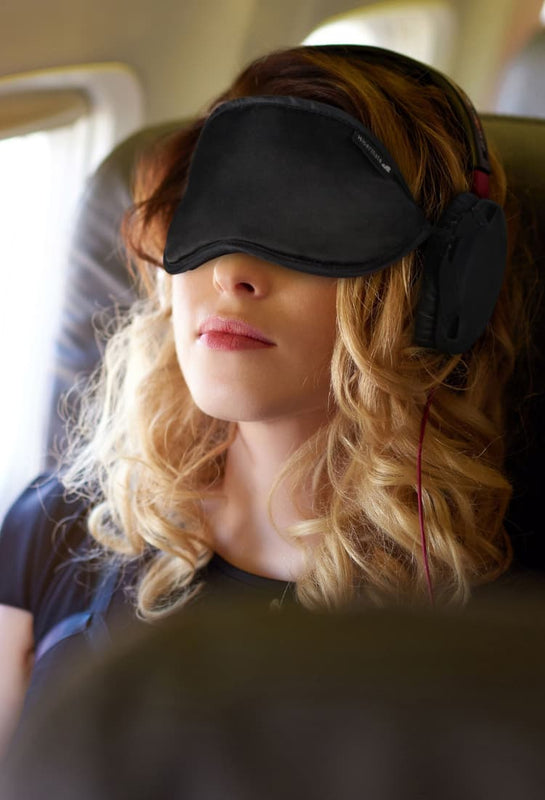
4.Wear an eye mask while on the flight to help you sleep.
In fact, an eye mask can be used when traveling on any form of transport if you’re sleepy. However in some places, make sure your possessions are safe from thieves while you’re dozing.
Business travelers may also find it difficult to deal with jet lag. They can find it difficult to perform to their top potential if they haven’t had enough time to acclimatise to their new time zone. If the budget allows, business people should allow at least 48 hours (minimum) to adjust to the new time zone before entering into meetings or stressful negotiations.